






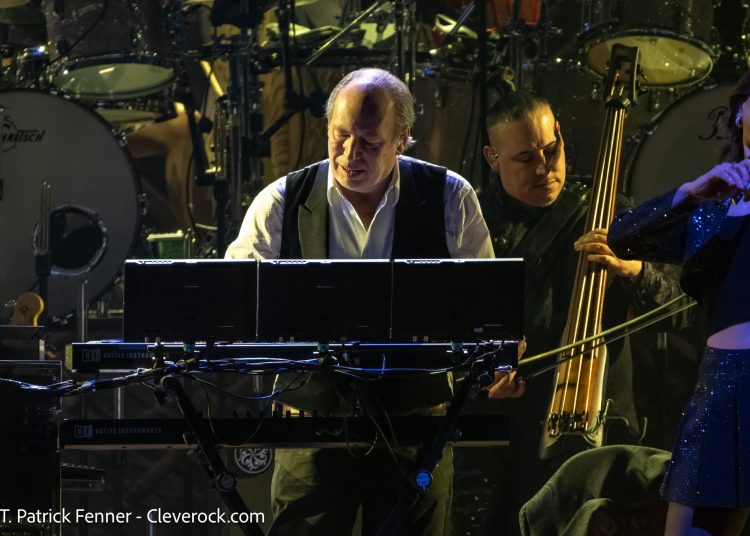
On February 4, 2025, Hans Zimmer treated a packed Nationwide Arena to some of his most iconic scores, backed by a revolving cast of talented musicians. The concert, part of a rare extended North American tour, showcased both Zimmer’s unparalleled ability to blend classical orchestration with modern rhythms, and his incredible collaborative spirit.
The setlist was a testament to Hans’ varied career, and no doubt meant to show both his composing abilities and range, but it also seemed to be just songs he really liked to play live, in addition to the obvious crowd pleasers.
The show opened with a man on stage with a large bass drum and a woman singing against a black backdrop. As she walked slowly across the front of the stage, she sang the vocals to “Dune: House Atreides.” The visuals behind her on the screen started with small golden sparkles and increased as she walked further. The audience was bathed in the same shimmering lights. The song slowly built to a powerful crescendo, the screen rose, and Hans and the rest of the large orchestra were revealed. Hans rushed to the front of the stage, electric guitar in hand, conductor outfit on, a massive grin on his face. This was not going to be your parents’ orchestra show.
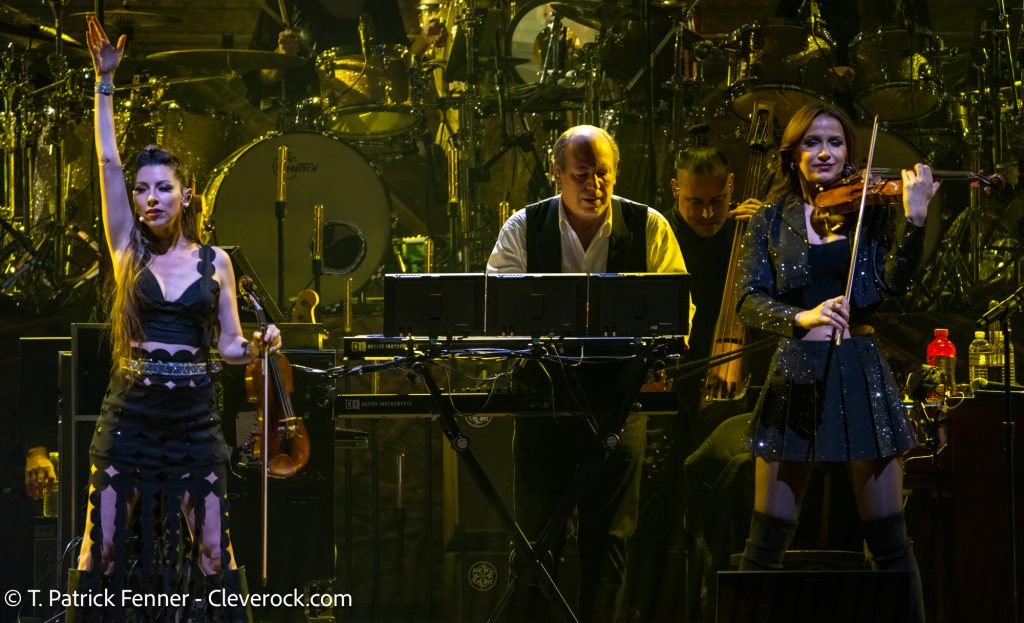
There were no rows of chairs with people quietly sitting in place. Instead, musicians moved about the stage all night, from left to right, back to front, up and down three levels packed with string sections and dual drummers. Even the ones sitting down on the different levels banged their heads and whipped their hair around as they played. All of this surrounded Hans, at his home base of sorts in the center-front of the stage, with his synthesizers and upright piano. He bounced back and forth between the two throughout the night, when he wasn’t making his way to the synthesizer at the top of the set or playing guitar up front or working his way over to the side of the stage to play one of the many percussion instruments.
“Good evening, ladies and gentlemen,” Hans said after the first two songs. “I don’t do this professionally,” he said, referring to the concert itself. “I usually sit in a dark room with no windows… Let’s pretend we’re having a dinner party and having a chat…. Slightly unprofessional but sort of alright,” he said, setting the jovial tone for the evening. “I’ve brought my best friends with me,” as he introduces “the voice of Dune,” who had opened the show and said they had just won a Grammy two nights before. Notice the “we” in that statement because the scores were very much a collaborative effort, with Hans at the helm, and throughout the night, he made sure to showcase the other musicians on the stage with him.
In keeping with that spirit, the next person he introduced was cellist Tina Guo, whom many people in the crowd already seemed to know by name. The next suite of songs was from Wonder Woman 1984, and it was immediately evident why he had introduced Tina before this. She killed it, playing the cello like an electric guitar. The crowd loved it.
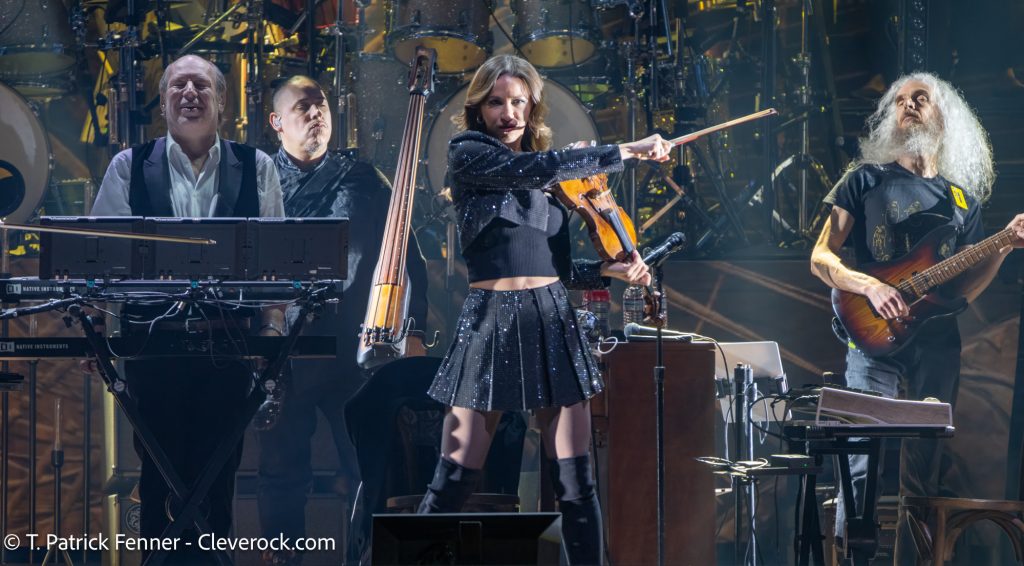
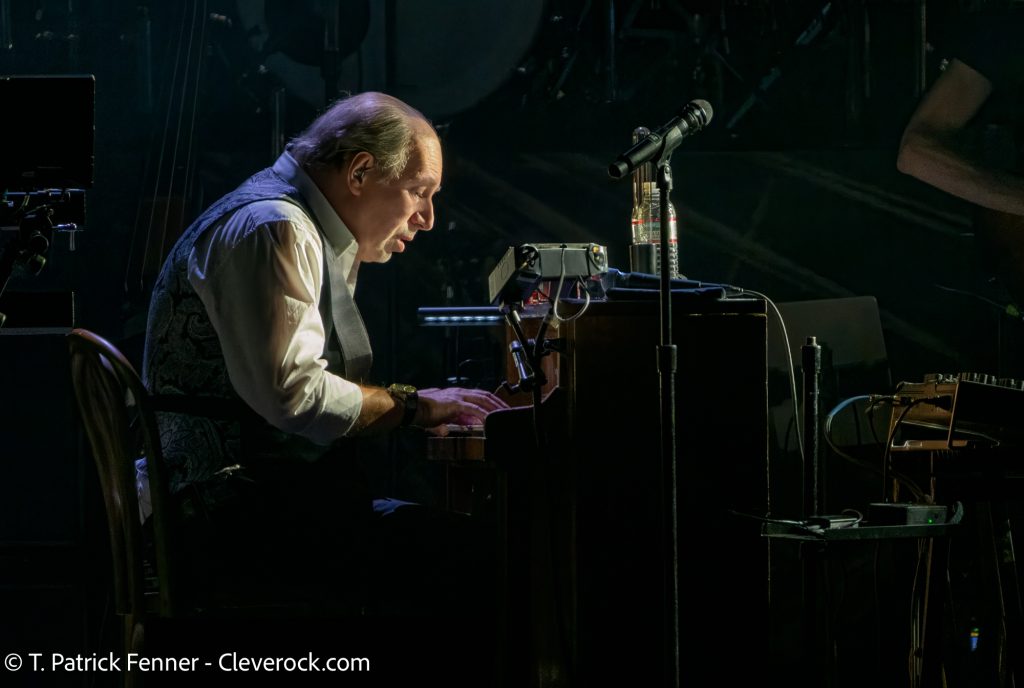
During the Man of Steel score, Hans started with the upright piano and the song built, adding drums and electric guitar, and then into the rest of the strings. At which point, Hans grabbed a chair, flipped it around, and sat down, staring in awe at the guitarist Guthrie Govan, who soloed in a singular spotlight.
Afterward, Hans told the crowd: “Some bookkeeping happened today… Today is our 204th show, and for 204 shows, he has never played the same thing,” pointing toward Guthrie, which was impressive, and then Hans went on to say it was the best solo he’d ever heard Guthrie play. “That’s why I had to go out and play live,” He explained. “We play better if we have a great audience.”
Next up were themes from Gladiator and The Pirates of the Caribbean. Even the most familiar scores had their own flairs and subtle twists. Regardless, these songs will still be stuck in your head for days after the concert. The highlights of these songs included the Armenian windpipe played by Pedro Eustache, Hans’ guitar playing and the impressive vocal work by Laura Cutler.
After the intermission, the show opened with another two people in front of the screen. One was on a stand-up bass, and the other was Pedro with another pipe of some sort. Once the screen rose, Hans was revealed to be on the synth at the top of the set.
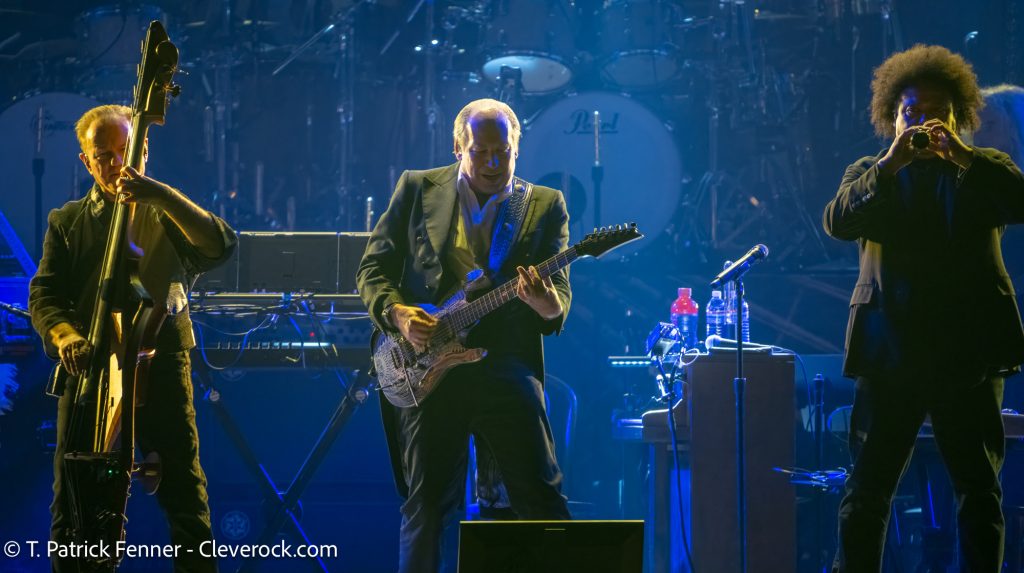
Moving yet again, during The Dark Knight Suites, he goes out into the crowd with his bass guitar, a big smile on his face. With him was another bassist, also in the crowd; the two of them met in the front and had their dueling bass-off while a third bassist played on stage. Afterward, Hans hit us with “The age-old question. Should you have one bass player or three bass players? I’ve chose to have three.”
After music from The Last Samari, he showed us the musical pipe they made out of PVC piping from Home Depot, The Dark Phoenix Suite. Hans told us that not everything can turn out to be “the refined piece of art we were hoping for,” giving the crowd a good chuckle. Then he went a bit further and called the move “complete and utter crap.” But he said he still liked playing the music, “Even though the movie was terrible.” Right from the start, it was evident why he liked playing it. They were rocking out, showcasing a bit of Hans’ punk roots.
Then came Dune: Paul’s Dream, complete with dancers in the crowd, with shrouds over their faces. The “voice of dune” yet again showing her skills. It also put Hans back on electric guitar and showcased more of the thundering drums from Aleksandra Šuklar as the percussion section.
The highlight of the evening was no doubt suites 1 and 2 from Interstellar. The violins and the aria from the amazingly talented Leah Zeger, who studied opera and had an exceptional voice, really exhibited the story’s drama. Above the crowd, lights on the disco balls mimic stars and space across the entire venue. Light beams came down from the ceiling to make columns on the stage, reminiscent of scenes in the movie. All three drummers came down to join in the percussion section. An aerialist in all white dangled high above the stage. These songs from Interstellar alone were worth the price of admission.
The set closed out with three suites from The Lion King, which felt like an abrupt change from Interstellar, but who am I to question it? Oddly, the pacing between the two songs did feel similar.
The encore started with the theme from the James Bond movie No Time To Die, which started with a startling bang, followed by the familiar opening on the bass, the crowd clapping along.
The final song was Inception: Time, and as the crowd erupted to hear it, a top spun on the screen in the background. As the song closed, the venue was so quiet, immersed, and hyper-focused that you could almost hear a pin drop, a wild feeling in a venue of that size.
By stripping away the visual elements and focusing solely on the music, Zimmer offered a fresh perspective on his work, highlighting the power of composition and live performance to evoke emotion and tell stories. It was a night to remember, one you feel lucky to witness, reaffirming Zimmer’s status as one of the most influential composers of our time.
 © 2025 CleveRock Music Portal. A PROUD SHAPE CLEVELAND PRODUCTION