






Beetlejuice Brings Its Kooky, Spooky Spectacle to Akron — An Interview With Associate Music Director Chase Kessler
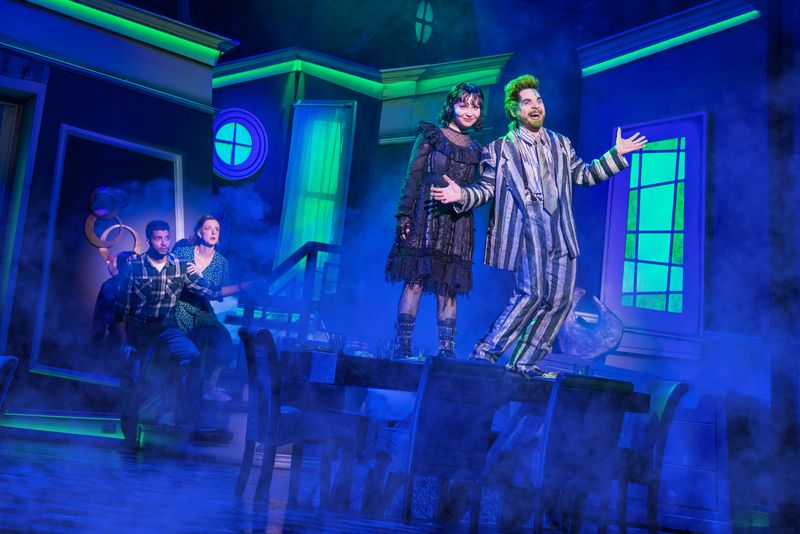
The ghost-with-the-most is getting ready to make his presence known in Akron when Beetlejuice takes over E.J. Thomas Hall for performances September 22 and 23. Based on Tim Burton’s beloved 1988 film, the touring production brings the story of Lydia Deetz, a strange and unusual teenager whose world is turned upside down when she encounters a recently deceased couple and the mischievous demon who lives between the worlds of the living and the dead.
In other words, it’s a story about grief, family, death, ghosts and demons — which sounds like a rather unusual recipe for a feel-good night at the theater. Somehow, Beetlejuice pulls it off.
The musical has enjoyed considerable success since making its Broadway debut, earning a devoted audience with its combination of irreverent humor, eye-popping stagecraft, energetic performances and a score that embraces everything from pop-rock and synth-pop to theatrical horror. The production has also received plenty of praise for its visual spectacle. Entertainment Weekly famously called it “A FEAST FOR THE EYES AND SOUL!,” while Variety dubbed it “SCREAMINGLY GOOD FUN!”
For the associate music director, Chase Kessler, the Akron performances represent something considerably more personal than simply another stop on a touring schedule. The Northeast Ohio native and Baldwin Wallace University graduate has been a fan of Beetlejuice since long before he found himself working on the musical.
Kessler earned his degree from Baldwin Wallace in 2024, majoring in Musical Theatre Direction. His relationship with music began much earlier, however, when he started taking piano lessons at around five years old. That early introduction to the instrument eventually developed into a passion for musical theater and, specifically, the often-overlooked art of music direction.
Kessler has a role that touches virtually every aspect of the production’s musical machinery.
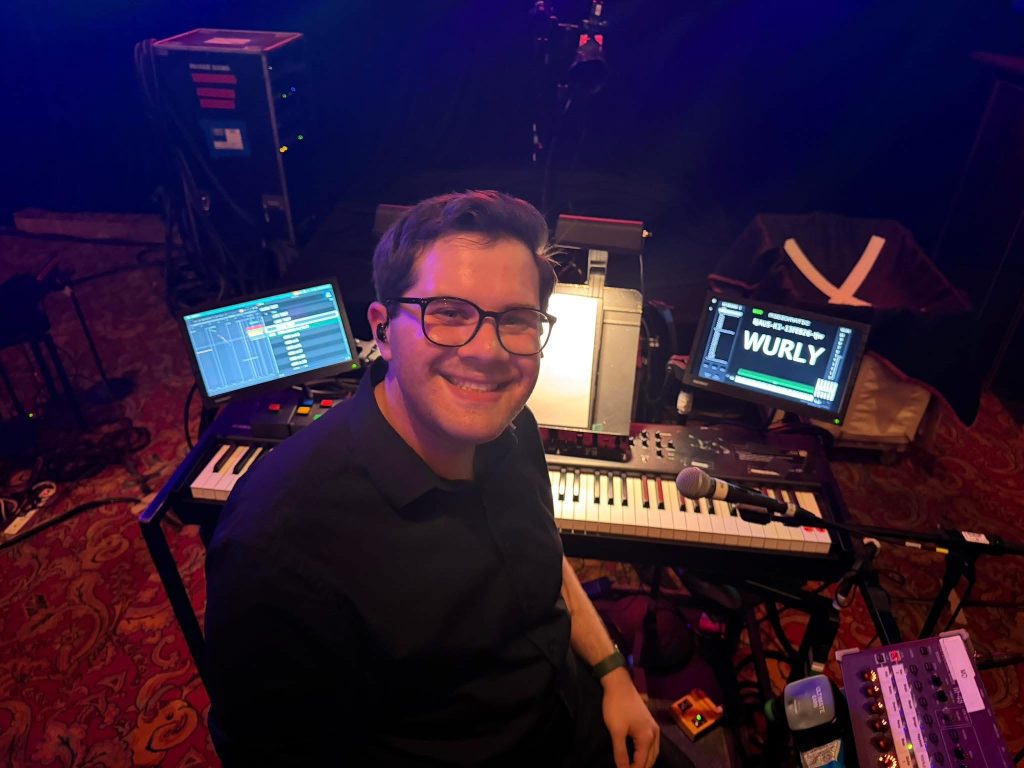
“As the associate music director, my primary job is to help out our main music director, Charlie Yokom. That could involve playing for rehearsals, giving out notes, et cetera, et cetera. The other big part of my job is playing keyboards in the pit. I play the second keyboard book and have a lot of fun, spooky sounds, and a lot of other crazy stuff to help fill out the sound of the band. There’s so many cool and different aspects of music direction from conducting to orchestrating, to playing the piano, to music technology. It kind of encompasses everything that I love.”
That description might make music direction sound like a lot of jobs packed into one, and Kessler’s enthusiasm makes it clear that is precisely what he enjoys about it. There is the traditional musical side of the job, the technology side and the practical demands of keeping a complicated touring production sounding exactly the way it should night after night.
And Beetlejuice gives him plenty to work with.
The traveling orchestra consists of five musicians, with Kessler among the keyboard players. The pit includes two keyboard players, bass guitar and drums, while additional strings and brass parts are incorporated through tracks.
For audiences, that relatively compact group creates a remarkably expansive musical world. One of the reasons is the sheer number of styles packed into the score.
“It’s a really fun score. It’s kind of two different worlds. The musical numbers where people sing are kind of like pop-rock based. We have an indie singer songwriter number for Lydia. We have an 80s synthpop number for Beetlejuice and he’s convincing the Maitlands to join him in scaring people. But then you have the other side, which is kind of like this Tim Burton and Danny Elfman world of horror. Spooky music! A lot of the underscoring is kind of scored as if it was a cartoon. We have short little cues of music that are helping support what’s happening on stage and a lot of little motifs that go throughout the show. You’re getting the music from the movie that you would expect, along with this fun news score that has a lot of heart and has things to say as well.”
That combination gives the musical an identity that should feel familiar to fans of Burton’s original film while still establishing its own personality. It isn’t simply a stage version of the movie with songs dropped into the middle. The music becomes another character in the story, constantly shifting to match the manic, macabre and occasionally heartfelt world unfolding onstage.
And the musical shifts quickly.
“The sound effects… Our sound team is great. We don’t trigger most of those. A lot of them are triggered by sound and a lot of them have to be very specific with what’s happening on stage. Big props to our sound team for that. But in terms of the pit, the sound of the show, we have to switch between so many different styles. We have a big band jazz number that opens act one. In the opening number, we have to switch between ska, heavy metal, children’s music, and jazz. It’s an ever changing eclectic style to match the franticness of Beetlejuice. It’s a really fun challenge to do that. Plus, you get the iconic songs of ‘Day-O’ and Jumping In Line from the movie as well.”
For anyone familiar with the original film, hearing those iconic Harry Belafonte songs woven into the production is bound to be one of the show’s biggest nostalgic treats. But Kessler’s description of the musical landscape suggests that audiences shouldn’t expect the entire evening to sound like a trip down memory lane. There is plenty of new material — and plenty of musical mischief — along the way.
Kessler also had a personal reason for wanting to be part of the production. He grew up watching Tim Burton’s movies, including The Nightmare Before Christmas, Corpse Bride and, of course, the original Beetlejuice. When the musical was being developed, he made a point of seeing it during its out-of-town tryout in Washington, D.C., before later seeing it on Broadway during its first run.
“I’ve always loved this show. I grew up on Tim Burton movies, Nightmare Before Christmas, Corpse Bride, the original Beetlejuice, of course. When I saw they were making a musical about this in 2018, I went to DC to see the out of town tryout and then saw it on Broadway during its first run. I was always like, ‘Man, I would love to be a part of a show like this.’ I just love the world of Tim Burton and anything spooky, anything a little kooky; a little different. When I was offered this position, it was a dream come true. I was one of those original fans and now I get to do it every day, which is such a treat. I adore the show. I think it’s so much fun, but has a lot to say about grief and death and allows you to approach it in a very lighthearted and fun way, where you can still be entertained and have a great time.”
That connection is perhaps one of the more charming parts of Kessler’s story. He didn’t simply stumble into Beetlejuice as another professional opportunity. He was sitting in the audience years ago thinking that working on a production like this would be a dream. Now, he’s helping make that production happen every night.
And his path toward that career began at home.
Kessler’s mother is a K-8 music teacher who also runs a theater program, meaning that the performing arts were essentially part of his upbringing. Still, it took a few specific moments for Kessler to realize that theater wasn’t simply something he enjoyed — it could be the career he wanted.
“My mom is currently a K-8 music teacher and runs a theater program at her school and ran it growing up. It was kind of always a part of my DNA, but it really wasn’t until I saw Newsies on the Macy’s Day Parade back in 2011, I was like, ‘Oh, this is really cool and I want to see it.’ It kind of grew from there. The show that really made me fall in love with music direction was Hamilton. Everyone was raving about the lyrics and all that, but I’m listening to the band underneath being like, ‘Oh, what is this? Who does this?’ It led me down this huge rabbit hole of where I am today. In terms of musicals, that’s kind of where I fell in love. It was kind of always a part of my life and I feel like I was kind of destined to be a part of it somehow.”
That curiosity about what was happening underneath the actors’ performances is exactly the kind of perspective that makes Kessler’s role with Beetlejuice so interesting. While audiences naturally focus on the actors, costumes, choreography and elaborate sets, there is an entire musical engine operating beneath the stage.
And there is a lot happening on that stage.
Kessler encourages audiences to keep their eyes open for the smaller details, particularly when it comes to the set. The production is designed as a visual spectacle, but many of its most interesting touches can be easy to miss if you’re only watching the action directly in front of you.
“The thing about our show is not only is the material great, it is a spectacle to look at. There are so many cool little hidden details. One of my favorite things to look at is our house set changes three times during the show. It starts off as the Maitland house, and then when the Deetz move in and it changes. And then when Beetlejuice takes over, he changes the house as well. There’s a lot of really cool hidden details in the set and seeing how it changes. We have a cool new art piece over the fireplace when Beetlejuice takes over, which is really cool to look at. There’s a lot of really cool hidden details in our attic set. I mean, obviously everyone loves the sandworm and our sandworm is super cool and we love seeing her come out and do the thing.”
Yes, there is a sandworm.
No, this is not the kind of show where you should spend the entire performance trying to figure out how they made the sandworm.
Just enjoy the sandworm.
But underneath all of the visual mayhem, Kessler believes the production has something genuinely meaningful to offer. Beetlejuice deals with grief and death, but it does so without turning into a two-and-a-half-hour exercise in existential dread. The show’s humor, music and spectacle provide a way for audiences to explore those themes while still having an enormous amount of fun.
That ability to provide an escape is something Kessler takes seriously.
“I joke constantly about how my job isn’t that important and there are people doing more important things, being doctors, et cetera, but to be able to be a small part of providing that escape from life is truly special. I think especially with how things are going, the arts are essential, and lately, it has been hard for some people to get access to the arts. So to be able to be a part of a show where people can come in and forget their troubles and reflect on themselves is really, really special.”
It’s a sentiment that fits Beetlejuice surprisingly well. For all of its ghosts, demons, death jokes and supernatural chaos, the musical is ultimately about people trying to process loss, reconnect with one another and figure out how to live — which is a pretty relatable message for a show featuring a dead guy with a striped suit and questionable hygiene.
Kessler hopes Akron audiences come ready to embrace all of it.
“If you love spectacle, if you love a show with heart, if you love a show that is a little bit different, a little kooky, a little outside the box, you’re going to have such an incredible time. It is super fun with lots of dancing and lots of musical numbers. It’s just a blast and you’ll leave feeling great and going out into the world and reflecting on life a little differently.”
That sounds like a pretty fitting invitation for a production whose central character has spent years convincing people to say his name three times.
Akron only has to say it once.
Or twice.
Probably best not to risk the third.

 © 2025 CleveRock Music Portal. A PROUD SHAPE CLEVELAND PRODUCTION